The MHPSS Collaborative and UNICEF’s Adolescent Mental Health Hub have launched Learning Circles, a new collaborative initiative designed to create dialogue on some of the most urgent and contested issues affecting adolescent mental health. Rather than relying on one-way presentations or expert-only panels, Learning Circles are designed as facilitated spaces where young people, practitioners, policymakers, researchers and advocates can examine evidence together, challenge assumptions and reflect on what complex issues mean for policy, practice and lived experience.
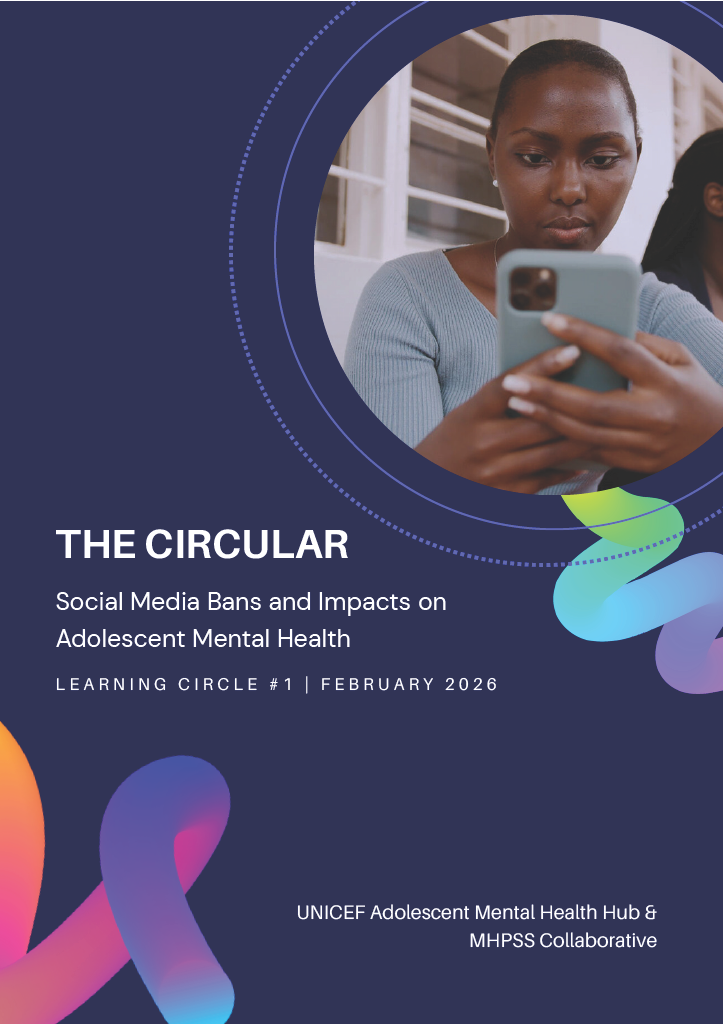
Each Learning Circle is followed by the publication of The Circular, a short synthesis of the key messages, tensions and emerging insights from the discussion. The first edition of The Circular captures the outcomes of Learning Circle #1, held on 26 February 2026, which explored one central question: whether restricting or banning social media for adolescents is a justified response to concerns about their wellbeing.
Moving away from narrow policy framing
This first discussion took place amid growing international momentum behind age-based social media restrictions. But participants repeatedly stressed that the policy debate is often framed too narrowly, as if the choice were simply between protection and access. The Learning Circle opened up that binary and surfaced a more complex picture. A key takeaway was that hard bans are unlikely to work as intended. For many adolescents, social media is already embedded in daily life as a space for friendship, information, creativity, identity exploration and support. Blanket restrictions may therefore displace young people to less regulated platforms without addressing the design features and business models that contribute to harm in the first place.
The Circular also highlights that the evidence base remains contested, not because harms are imaginary, but because independent researchers still lack sufficient access to the platform data needed to study impacts rigorously. Participants pointed to the need for more transparent data access, stronger accountability from platform companies and more careful attention to how different adolescents experience digital spaces differently.
Equity and inclusion
Equity emerged as a central concern throughout the dialogue. For LGBTQ+ young people, young people with disabilities, and adolescents experiencing geographic or social isolation, digital spaces can function as vital lifelines. Removing access without understanding these realities risks deepening exclusion rather than reducing harm. Participants also emphasized that young people are too often excluded from the policies that shape their digital lives, and that meaningful participation must go beyond symbolic consultation.
Across the conversation, several more promising directions emerged: platform redesign with safety and transparency built in by default, digital literacy and emotional awareness in education systems, regulation that targets specific harms rather than blanket exclusion, and institutional structures that give young people genuine influence in decision-making. Together, these pathways point to a more nuanced and rights-informed agenda for protecting adolescent mental health in digital spaces.