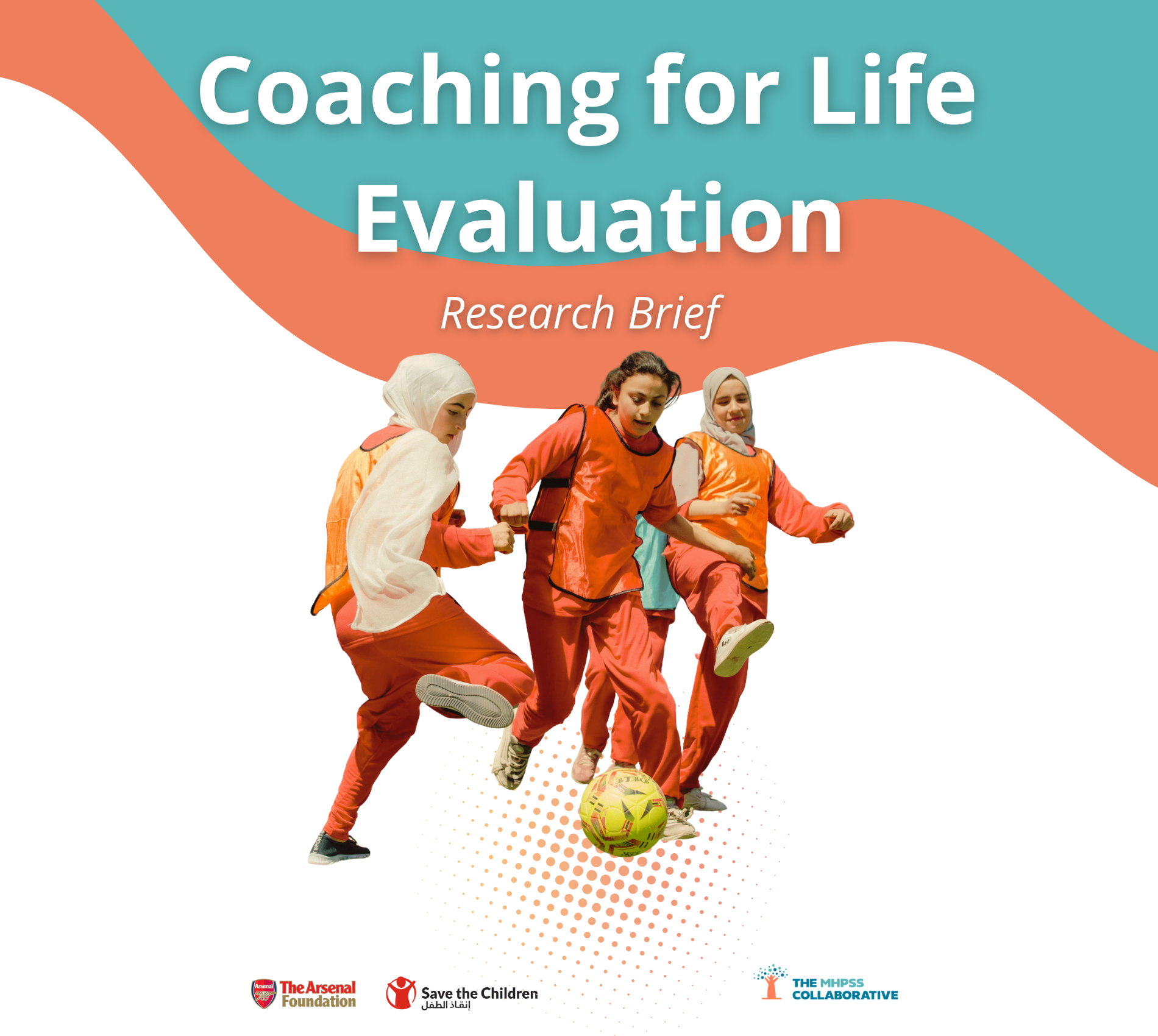

Coaching for Life is a sports-based mental health and psychosocial programme.
It integrates Save the Children’s child resilience approach with Arsenal’s sports for development model, using football as a tool to strengthen the wellbeing of children and youth.
Since 2018, Save the Children UK, The Arsenal Foundation and Save the Children Jordan have partnered to implement the programme for Syrian children and youth aged 10-17 in the Za’atari refugee camp, Jordan.
The program also engages caregivers and the wider community through activities that promote supportive family and community environments.
Importantly, Coaching for Life includes gender-focused activities aimed at empowering girls and boys and challenging harmful gender norms, roles, and practices. These efforts draw on Arsenal’s longstanding experience in promoting gender equality in local communities across North London, including its support for Arsenal Women – the club’s professional women’s football team.
"I changed a lot, in the beginning; I was weak and didn’t know how to deal with the things I faced. I was shy and afraid to speak, I didn’t know how to express what I was feeling. But after attending the sessions, I became more confident and was able to express how I felt. The sessions were really helpful in dealing with the situations I faced.”
Female respondent10-14 years focus group
The MHPSS Collaborative has had the honour of conducting a mixed method evaluation of the programme in partnership with Save the Children Jordan and UK, funded by the Arsenal Foundation.
The results and recommendations from the evaluation have been compiled in a short brief for donors and organisations interested in using sport-based MHPSS interventions for child and youth wellbeing in humanitarian and crisis settings.
Key learnings and recommendations
Drawing on lessons learnt from the implementation of CFL in Za’atari, the following recommendations for designing, implementing and evaluating sports-based MHPSS programs are intended for donors, implementers, and policymakers seeking to fund, implement, and evaluate sports-based MHPSS interventions in humanitarian and crisis-affected contexts:
- Promote gender-equity in sports-based MHPSS programs through ongoing stakeholder dialogue, responsive design, and gender-sensitive safeguards that balance cultural norms with equity goals. Support gradual norm change while upholding safety, agency, and inclusion.
- Tailor programming by age and gender, recognizing their influence on outcomes. Adjust session content, facilitation, and engagement strategies accordingly.
- Monitor program fidelity and implementation across sites to ensure consistent quality and outcomes. Investigate and address site-level factors affecting impact (coaching quality, facilities, community dynamics).
- Engage caregivers and the broader community to promote supportive environments that reinforce the wellbeing and resilience of children and youth.
- Link or integrate sports-based psychosocial programs with broader multisectoral services —such as education, livelihoods programs, and safety and security initiatives – to address broader socioeconomic drivers of psychosocial issues and gender inequality.
- Strengthen referral pathways to specialised MHPSS services. Train coaches to recognize distress, provide basic support, and make referrals. Consider integrating peer support models (e.g., I Support My Friends).
- Plan for sustainability early through donor advocacy, local leadership, and flexible funding models. Partner with local NGOs and youth groups and consider embedding the programme components into existing services.
- Adopt a community-led approach by engaging community stakeholders in program design and training former participants as coaches, junior coaches, and youth leaders.
- Adapt and validate measurement tools for specific contexts and populations, especially for complex psychosocial (e.g., social connectedness scale) and gender outcomes. Use mixed-methods and participatory approaches to capture nuanced changes.
The full brief is available in English and Arabic below: